
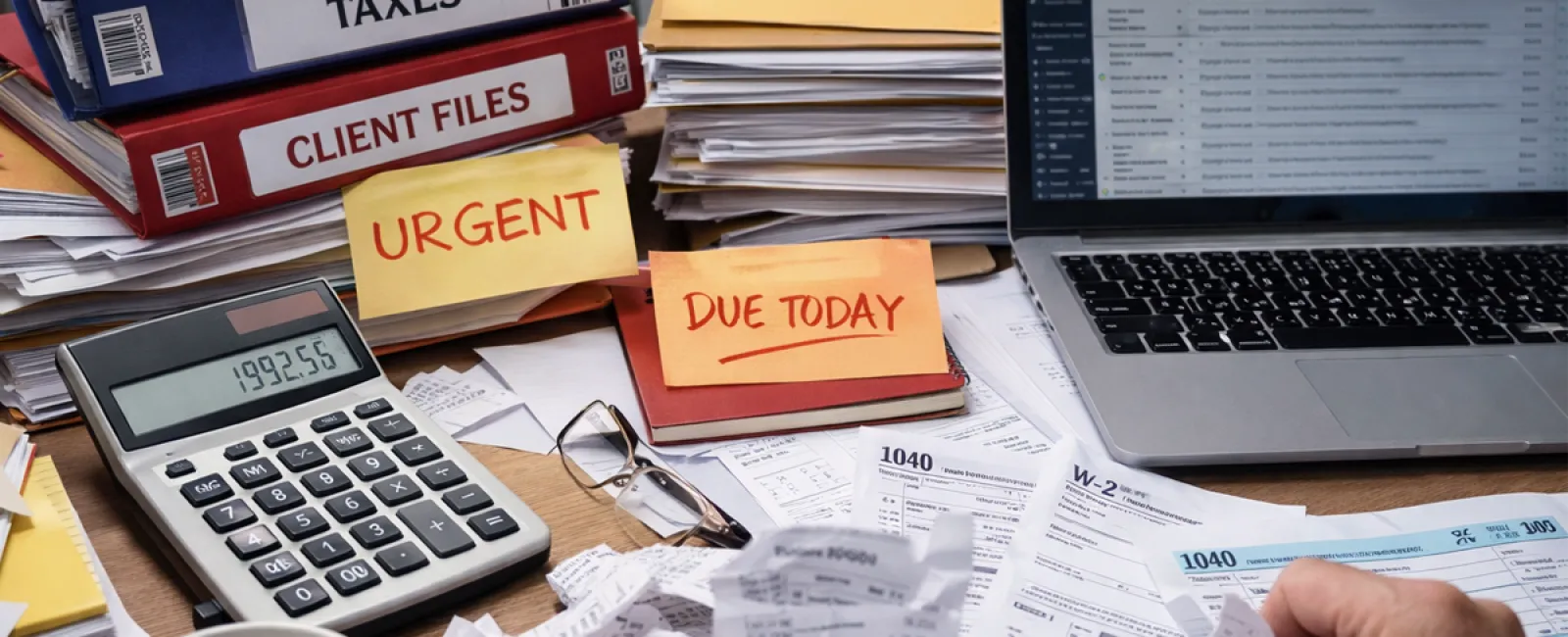
The busy month of March is here.
Your accountant is overwhelmed, your bookkeeper is rushed, and deadlines are closing in fast. Email inboxes overflow with messages that demand immediate attention.
Everyone is heads-down trying to make it through the month.
You already know this all too well.
But so do cybercriminals.
Security experts consistently report a sharp rise in phishing attacks during tax season, with March showing around a 28% surge in tax-related scam emails compared to quieter months. These emails are subtly crafted to blend into daily business communications during the busiest time of the year.
This is no accident.
It's strategic timing.
Here's what to expect and four practical steps to protect your business from becoming an easy victim.
Protecting the Overwhelmed Supply Chain
What many overlook is this:
Hackers don't merely target accounting offices.
They exploit the chaotic environment surrounding tax season.
During tax season:
- Clients hurriedly send sensitive documents
- Employees cut corners to keep pace with volume
- "Just send the file" replaces usual security checks
- Verification steps get skipped because everyone is overwhelmed
This rush accelerates errors.
Cybercriminals don't target calm, methodical firms—they strike the busiest ones.
And in March, business is booming.
Recognizing These Phishing Attacks
This isn't fiction.
It's an email that looks just like the others in your inbox.
- A message from "your accountant" asking to resend W-2 forms because they didn't arrive properly
- A vendor's email claiming their bank details have changed and requesting updates
- A DocuSign request for a tax document that "needs your immediate signature"
- An urgent email from "your CEO" who's traveling and needs help right away
These messages seem normal.
They mirror typical March business communications.
That's why these scams are so effective.
Why Busy Professionals Fall Victim
It's not about negligence.
It's simply human nature.
When your inbox is flooded and deadlines approach, you skim messages, assume the best, and react quickly.
Cybercriminals count on this.
Their emails are designed to slip past busy eyes by hiding subtle flaws.
They don't need you to be careless. They just need you to be rushed.
And in March, almost everyone is rushing.
Four Easy Habits to Avoid Becoming a Target
The good news? You don't need complex software or an expert team to lower your risk.
Just adopt a few mindful practices during your busiest periods.
1. Confirm payment changes by phone
If you receive an email about a vendor's bank details changing, don't reply directly.
Call the verified number you have on record to confirm the update.
This simple step can stop costly scams before they begin.
2. Pause before sending sensitive information
Urgent requests should make you slow down, not rush.
If someone demands W-2s, tax docs, or financial files "immediately," verify their identity first.
A legitimate sender will understand a moment's delay. Scammers won't.
3. Double-check "urgent" requests through another method
If an email stresses urgency, validate it via phone call, text, or an internal chat.
A quick confirmation can prevent costly mistakes.
True urgency holds up under scrutiny; fake urgency vanishes.
4. Alert your team to beware of scams
Remind your staff this week that tax season is prime time for phishing attacks.
Encourage them to slow down, verify requests, and speak up if something feels wrong.
This small cultural shift can save you a heap of trouble down the line.
Key Takeaway
Tax season is stressful enough—don't add falling for a scam to the list.
The scam emails flooding inboxes this time of year aren't clever—they're just perfectly timed.
They exploit your busy schedule.
They count on assumptions.
They rely on the rush everyone feels in March.
You don't have to revamp your entire security setup to stay safe.
Simply slow down when urgency hits and verify whenever something seems off.
That's often enough to keep your business secure.
Busy-Season Security Checkup
If your company already has strong security habits, fantastic.
But if tax season tends to throw your team into reactive mode, or you're unsure how urgent requests are handled under pressure, consider a quick security review with a free 15-Minute Discovery Call.
No pressure. No gimmicks. Just an honest look at small habits that could prevent big headaches during tax season.
If this message doesn't apply to you, feel free to pass it along to someone who might benefit.
Click here or give us a call at 816-238-3777 to schedule your free 15-Minute Discovery Call.